
Ancestral French expertise
The name Emmanuelle Khanh embodies a history, the nobility of craftsmanship, this French identity, in style and expertise. The House chooses to promote local production through an artisanal process and high-quality manufacturing. It pays tribute to its partners, who meticulously handcraft each piece. In total, over 80 steps are required to produce a pair of glasses.
FIRST CUTTING AND DRYING
Emmanuelle Khanh frames are cut from acetate, an organic material obtained by plasticizing cotton flakes and wood cellulose. It is a flexible, living material that offers infinite possibilities for coloring and patterns. The acetate sheets are cut into small rectangles (blanks), to the size of the frame, which are then dried in an oven to stabilize the material and remove glue residues and plasticizers.
TACK BONDING
For machining "bonded" nose pads, a tack – a square of crystal material – is bonded to each blank. This creates extra thickness at the nose, resulting in deeper nose pads and greater comfort.


CUTTING AND CURVING OF THE FRONTS
In each rectangle of material, a glasses front is sculpted: five or six different milling cutters shape the eye contours, the overall outline, and any inner and outer bevels. The front is then heated, making the material more malleable, then pressed against a curved mold to give it its curve.
HINGE INJECTION
Inside acetate rectangles that will become the temples, hinges are inserted. These hinges are welded onto the frame, which will provide stability and strength to the eyewear. They are injected into the material, with the acetate being softened in its center by a hot wire.
CUTTING AND ENGRAVING OF THE TEMPLES
The pre-injected temple blanks are cut according to the shape of a metal tool. A milling cutter, connected vertically to a guide, cuts the acetate. The temples are then engraved one by one by laser: on the inside, markings indicating the reference and dimensions of the glasses; on the outside, the location
of the logo.
LOGO APPLICATION UNDER RESIN & SPATULA SHAPING
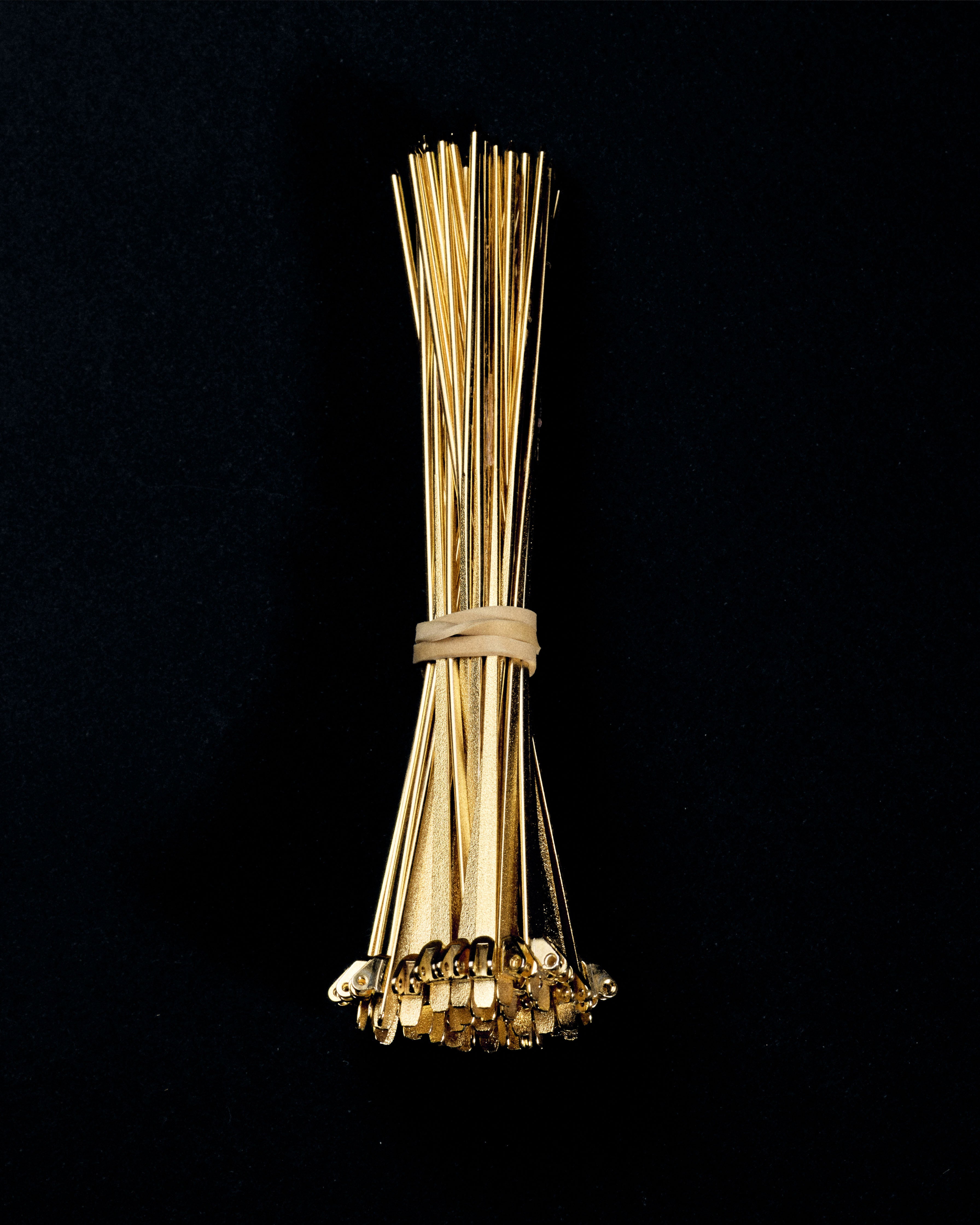
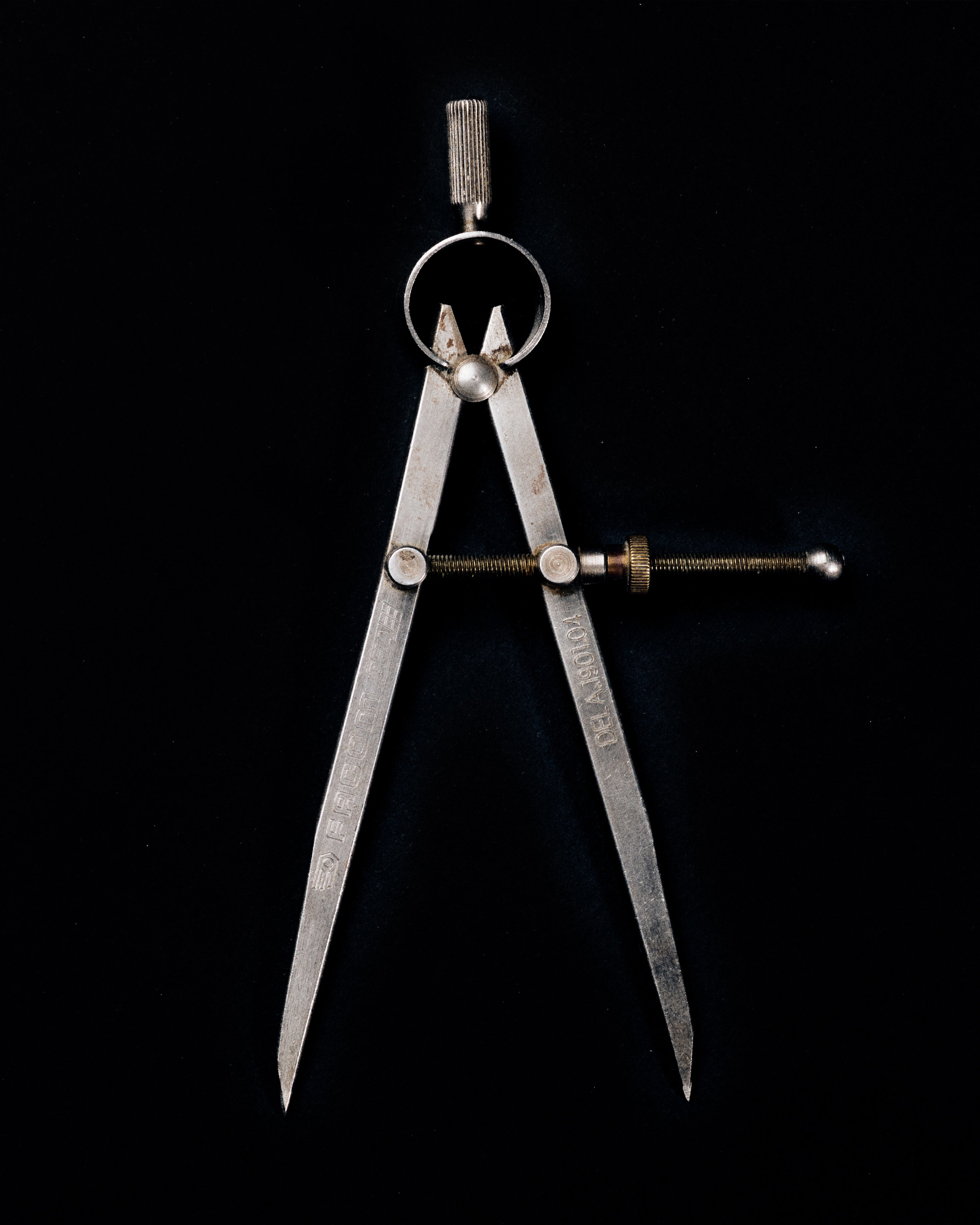
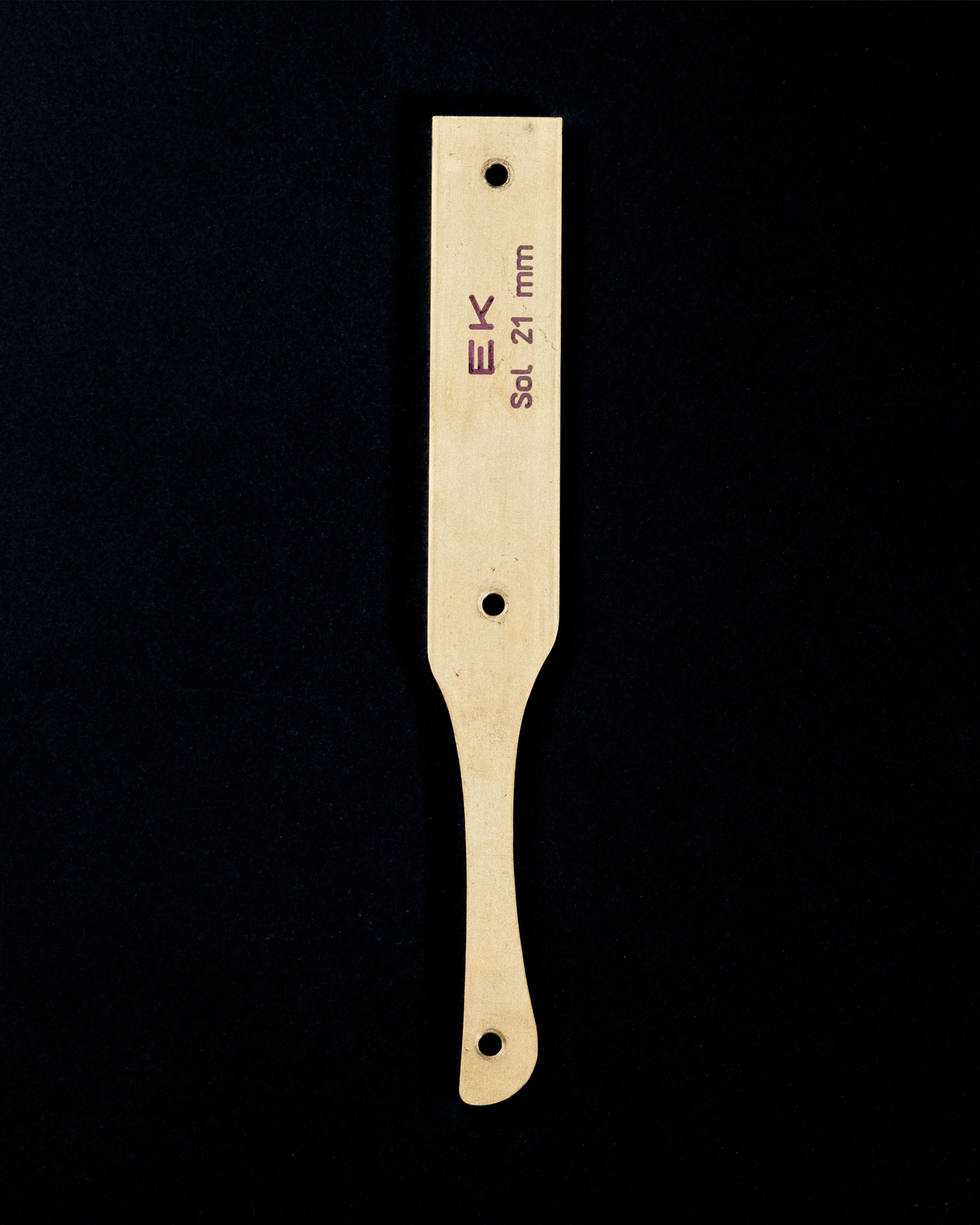
On each temple, the EK inlays are applied by hand, one by one with tweezers, into the laser-cut incisions. They are then covered with a clear resin. The resin must dry for several hours before being leveled. The temple tips are then heated and curved to provide comfort behind the ear.
ULTRASONIC BATH
The frame front and temples are placed in an ultrasonic bath. The ultrasound removes the finest acetate shavings resulting from the various cutting stages.
BARREL POLISHING
The frame front and temples are placed in a horizontal barrel full of wood chips covered with polishing paste. Once closed, it rotates for a week, during which the chips gently abrade and smooth the surface of the acetate. Prior to this, the metal hinges are covered with wax to prevent scratches. During the week, the future glasses pass through three different barrels, from the roughest to the finest, and make several back-and-forth trips in ultrasonic baths. Upon exiting the barrels, the parts are polished and shiny.


ASSEMBLY OF TEMPLES AND ANGULAR ADJUSTMENT
On the temples that have come out of the barrels, the laser-engraved inscriptions are filled with gold paint and the protections on the hinges are removed one by one. The front and temples are then assembled, screwed by hand. The connection between the open temples and the front is adjusted, and any excess material is filed away so that the joint between the temples and the front is smooth to the touch and sight.
FINAL POLISHING
The frame is polished one last time using a fluffy wheel rotating at high speed. This final step removes any dust from the frame that may have been created during the temple connection, and eliminates micro-scratches that may not have been removed in the barrels.
LENS CUTTING AND MOUNTING
The lenses are cut only once the frame has been polished, to perfectly adapt to the final shape of the eye. Each pair of lenses is carefully placed in a cutting machine. The pressure must be neither too strong, to avoid breaking the glass, nor too weak, to ensure a clean cut. The lenses are mounted on the assembled frame. The frame is finally complete.

